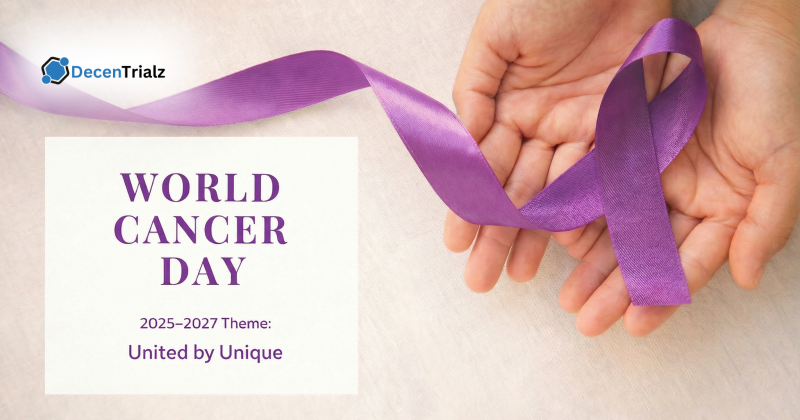
What is World Cancer Day?
Each year on February 4, World Cancer Day brings global attention to one of the most significant health challenges of our time. It is led by the Union for International Cancer Control and supported by the World Health Organization. The day serves as a coordinated global initiative to raise awareness, encourage prevention, improve access to care, and support ongoing cancer research.
Cancer affects millions of individuals and families every year across every region of the world. It is not limited by geography, income level, or background. Because of this wide impact, sustained global attention is necessary.
World Cancer Day brings governments, healthcare institutions, advocacy organizations, and communities together to strengthen cancer prevention strategies, improve early detection, and expand access to quality treatment. It moves the conversation from recognition to responsibility.
The Theme: United by Unique
The official campaign theme for 2025 to 2027 is United by Unique.
This theme reflects an important reality. While cancer connects millions of people globally, no two cancer journeys are exactly the same. Diagnosis, treatment response, support systems, and access to healthcare differ widely.
United by Unique emphasizes person centered care. It encourages healthcare systems to recognize patients as individuals rather than viewing cancer through a single standardized approach.
Modern oncology increasingly reflects this shift. Treatment decisions are now guided not only by cancer type but also by individual characteristics and patient preferences. The theme reinforces the idea that progress in cancer care must account for diversity in experience.
The Global Cancer Burden
Cancer remains one of the leading causes of death worldwide.
Recent global estimates indicate:
- Approximately 20 million new cancer cases are diagnosed each year.
- Close to 10 million deaths occur annually due to cancer.
- The number of cases is expected to rise in the coming decades as populations grow and age.
These figures reinforce why World Cancer Day must extend beyond recognition and translate into measurable action.Cancer affects families, workplaces, and national health systems across continents.
At the same time, advances in early detection programs, improved treatment approaches, and stronger public health initiatives have contributed to measurable progress in many regions. The global picture includes both challenge and improvement.
A Brief History
World Cancer Day was established in 2000 during the World Summit Against Cancer for the New Millennium in Paris. On February 4 of that year, the Charter of Paris Against Cancer formally designated the day as a global observance.
Since then, participation has expanded to more than 100 countries. Multi year campaign cycles encourage long term commitment rather than a single day of recognition.
Each theme builds on the previous one, reinforcing prevention, access, and collaboration. United by Unique continues that trajectory by focusing on individual experience within global unity.
Why World Cancer Day Matters
World Cancer Day serves as a global platform for strengthening prevention, improving access to care, and advancing coordinated cancer action.
Encouraging Prevention and Early Detection
Many cancers are more treatable when identified early. Public awareness about screening programs, vaccination, and lifestyle risk factors supports informed health decisions. Education helps reduce misinformation and promote evidence based understanding.
Addressing Inequality in Access
Access to cancer diagnosis and treatment is not equal everywhere. Some communities face delays due to limited healthcare facilities or financial barriers. World Cancer Day highlights these disparities and encourages stronger national cancer strategies.
Recognizing the Full Impact of Cancer
Cancer affects more than physical health. It influences family life, employment, financial stability, and long term planning. United by Unique reminds healthcare systems and policymakers to consider these broader effects when designing care programs.
From Awareness to Action: The Role of Research
Phase 1 cancer clinical trials are often the first step in testing a new therapy in people. These studies primarily focus on safety and determining appropriate dosage levels before larger trials evaluate how well a treatment works. Careful monitoring and regulatory oversight are built into every stage of the process.
February 4 is not only a date of recognition. It is a reminder that awareness must lead to prevention, policy, equity, and continued cancer clinical trials that improve care worldwide.
Finding relevant cancer clinical trials often begins with guidance from a healthcare provider, who can help determine if a study aligns with a patient’s diagnosis and treatment history. In addition to clinical discussions, patients and caregivers can explore trial options through publicly accessible research registries and condition-specific listings that categorize studies by cancer type. These resources provide an easy way to review active trials, eligibility criteria, study locations, and research areas. Platforms like DecenTrialz simplify this process by presenting clinical trials organized by medical condition, allowing users to efficiently navigate available research opportunities in a clear and structured manner.
Ongoing Challenges
Despite progress in cancer prevention, treatment, and research, significant challenges continue to affect outcomes worldwide.
In many regions, cancer is still diagnosed at later stages due to limited screening programs, low awareness, or gaps in primary healthcare access. Differences in healthcare infrastructure mean that access to diagnostic tools and specialized treatment varies widely between countries and communities.
Financial barriers remain another concern. The cost of cancer care, including diagnostics, treatment, and supportive services, can place a substantial burden on patients and families, particularly in lower income settings.
Research participation also reflects ongoing imbalance. Certain populations continue to be underrepresented in cancer research, which can limit how well study findings apply across diverse groups.
Addressing these challenges requires sustained coordination between governments, healthcare systems, advocacy organizations, and research institutions. World Cancer Day provides a global platform to highlight these issues, encourage collaboration, and support long term strategies that move cancer care forward.
What Beyond Awareness Truly Means
World Cancer Day is not only about recognizing the scale of cancer. It is about strengthening prevention efforts, improving early detection, expanding equitable access to care, and supporting ongoing research including cancer clinical trials.
Moving beyond awareness requires coordinated prevention, equitable access to treatment, and continued investment in cancer clinical trials.
United by Unique captures the balance between collective responsibility and individual experience.
Beyond awareness means turning knowledge into policy. It means turning data into improved systems. It means turning conversations into measurable progress.
February 4 is not only a date of recognition. It is a reminder that awareness must lead to prevention, policy, equity, and continued cancer clinical trials that improve care worldwide.
Leave a Reply