When Awareness Becomes Personal
Kidney disease clinical trials are shaping the future of prevention, treatment, and patient care at a time when chronic kidney disease continues to affect millions of people worldwide.
On a quiet morning in March, David sat across from his doctor reviewing routine blood test results. Just a year earlier, his health felt completely normal. Now he was hearing a phrase that many patients encounter unexpectedly: declining kidney function.
The conversation quickly shifted toward monitoring, medications, and lifestyle changes. Then his doctor mentioned something David had never seriously considered before – clinical research.
He is far from alone.
About 37 million adults in the United States are living with chronic kidney disease (CKD), and nearly 90% of people with early-stage CKD do not know they have the condition, because symptoms often appear only after significant kidney damage has already occurred.
This is why global awareness campaigns such as World Kidney Day play such an important role.
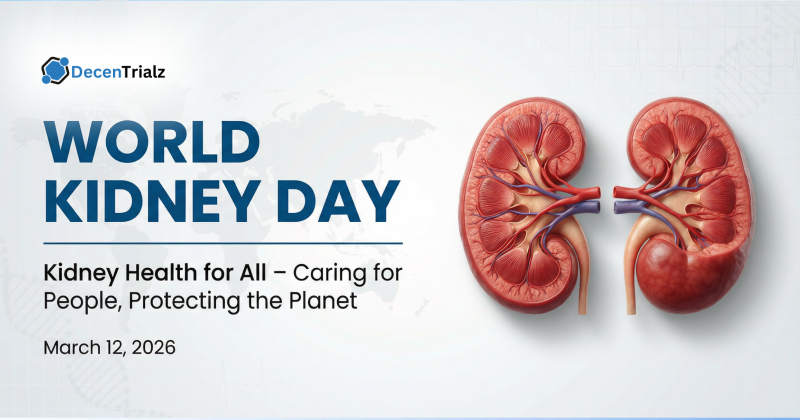
Observed every March, World Kidney Day is a worldwide health initiative led by international kidney organizations to highlight the importance of kidney health, early detection, and research that may improve future treatments. The annual kidney day celebration helps patients, families, and healthcare providers understand the growing impact of kidney disease.
While awareness campaigns help people recognize the risks of kidney disease, clinical trials represent the scientific work happening behind the scenes to develop better therapies.
For patients like David, and for those who have never participated in research before, World Kidney Day can also be a moment to explore kidney disease clinical trials and learn how medical discoveries move from the laboratory to real patient care.
PURPOSE: A First Look at Kidney Disease Clinical Research
If you have never participated in a study before, the term clinical trial may sound intimidating.
Some people worry about being treated like an experiment.
In reality, modern kidney disease clinical trials follow strict safety standards and are carefully reviewed by regulatory authorities, ethics committees, and medical experts.
Many studies do not test completely unknown therapies. Instead, they focus on:
- Improving existing treatments
- Reducing unnecessary medications
- Personalizing therapy based on patient characteristics
- Improving quality of life for people living with CKD
Below are five ongoing kidney disease clinical trials currently enrolling patients. Each study explores a different approach to improving kidney care and is explained in clear, patient-friendly language.
Trial 1: Baxdrostat + Dapagliflozin
Could Combining Two Medicines Slow Kidney Disease?
Sponsor: AstraZeneca
Study Type: Phase 3 double-blind randomized trial
Participants: Approximately 5,000 patients globally
Locations: Around 753 research sites worldwide
This large Phase 3 double-blind clinical trial evaluates whether adding baxdrostat to dapagliflozin improves kidney outcomes compared with dapagliflozin alone.
Dapagliflozin, an SGLT2 inhibitor, is already widely used to slow kidney disease progression. Baxdrostat works by blocking aldosterone synthase, a hormone pathway linked to kidney damage and high blood pressure.
Researchers are studying whether the combination of these medications may further reduce kidney function decline and cardiovascular complications.
Why It Stands Out
- Large global randomized clinical trial
- Builds on a proven CKD therapy
- Tests a new hormonal pathway approach for kidney protection
What It Could Mean for Patients
If successful, this treatment combination could represent a new approach for slowing CKD progression.
Trial 2: EASi-KIDNEY Vicadrostat + Empagliflozin
Expanding Treatment Options for Non-Diabetic CKD
Sponsor: Bayer
Study: EASi-KIDNEY Phase 3 trial
Participants: Global multi-center research study
This study evaluates vicadrostat, another aldosterone synthase inhibitor, combined with empagliflozin, an SGLT2 inhibitor widely used for kidney and cardiovascular protection.
Many earlier kidney disease studies focused on patients with diabetes. However, a large number of CKD patients develop kidney disease from other causes.
This research aims to determine whether the drug combination can slow kidney disease progression in patients with non-diabetic CKD.
Why It Stands Out
- Focuses on non-diabetic chronic kidney disease
- Combines therapies targeting different disease pathways
- Large global Phase 3 research trial
What It Could Mean for Patients
The results could expand treatment options for CKD patients whose disease is not caused by diabetes.
Trial 3: CHOOSE Home Dialysis Trial
Can Community Support Improve Access to Home Dialysis?
Sponsor: Montefiore Medical Center
Study Focus: Community health worker support
Locations: U.S. research centers
Dialysis is a life-saving therapy for patients with advanced kidney disease. However, many patients are not aware that home dialysis may be an option.
The CHOOSE Home Dialysis Trial evaluates whether trained community health workers can help patients better understand dialysis options and transition to home dialysis programs.
These health workers provide education, support, and guidance during the decision-making process.
Why It Stands Out
- Focuses on patient support and education
- May increase adoption of home dialysis
- Improves access to care for underserved communities
What It Could Mean for Patients
Home dialysis may allow some patients to receive treatment with greater flexibility and independence.
Trial 4: AP301 Lung Protection Study
Exploring Supportive Care for Dialysis Patients
Sponsor: APEPTICO
Study Type: Exploratory Phase 2 research
Patients receiving dialysis sometimes experience complications affecting other organs, including the lungs.
This study investigates AP301, a nasal spray therapy designed to help improve lung function and oxygen exchange in dialysis patients.
Although still early in development, the therapy represents a broader effort to address the overall health challenges experienced by people living with kidney disease.
Why It Stands Out
- Innovative supportive care research
- Addresses respiratory complications linked to dialysis
- Explores new treatment possibilities for dialysis patients
What It Could Mean for Patients
Future therapies like this could help improve overall health and quality of life for dialysis patients.
A Quick Word About Eligibility and Safety
Clinical trials are not right for everyone.
Eligibility depends on several factors, including:
- Stage of kidney disease
- Previous treatments
- Overall health status
- Personal treatment goals
The most important step is discussing any trial you are considering with your nephrologist or healthcare provider, who can help determine whether participation fits your care plan.
How DecenTrialz Helps Patients Navigate Kidney Disease Trials
Finding kidney disease clinical trials on your own can feel overwhelming.
Trial descriptions often include medical terminology, eligibility criteria, and location details that can be difficult to interpret.
DecenTrialz helps patients filter trials by condition, eligibility, and location in plain language, making it easier to review options and discuss them with healthcare providers.
DecenTrialz connects you with active CKD trials and gives you the information to make confident decisions so you can explore research opportunities and discuss them with your healthcare team.
Awareness is the First Step. Informed Choices Come Next.
World Kidney Day reminds us that statistics represent real people.
Behind the millions living with chronic kidney disease are families making decisions about treatment, quality of life, and hope.
Clinical research has already helped transform kidney disease care, from dialysis innovations to medications that slow disease progression.
Yet many eligible patients never explore clinical trials simply because they do not realize they are an option.
The annual kidney day celebration encourages conversations about screening, prevention, and kidney health.
But it can also be a moment to ask a new question:
Could exploring kidney disease clinical trials open another path forward for you or someone you love?