
Tag: Clinical Trials

  • Types of Clinical Trials in Medical Research: How and When They Are Used

    Types of Clinical Trials in Medical Research: How and When They Are Used

    Types of clinical trials medical research are an important concept healthcare professionals encounter when evaluating treatment options, reviewing emerging therapies, or collaborating with clinical research programs. However, in busy clinical environments, the structure behind clinical trial phases and study designs is not always fully explored.

    Consider a common situation in clinical practice. A physician is reviewing treatment options with a patient whose condition has progressed despite standard therapy. The patient asks whether any new treatments are being studied that could offer additional options. The physician recalls hearing about an ongoing clinical trial but needs to determine whether the study is appropriate for this patient.

    Before making a referral, several important questions arise. Is the study an early-stage safety trial or a later-stage treatment comparison? Is it an interventional trial where participants receive a specific therapy, or an observational study focused on monitoring disease outcomes? Does it involve a specific biomarker or disease subtype that affects eligibility?

    These questions highlight why understanding the types of clinical trials medical research is important for physicians, specialists, clinical coordinators, and medical researchers. Clinical trials are carefully structured research programs designed to answer different medical questions. Knowing how these study types function helps healthcare professionals identify appropriate research opportunities and guide patients toward relevant clinical trials.

    Globally, clinical research continues to expand rapidly. Publicly registered clinical studies listed on ClinicalTrials.gov now number in the hundreds of thousands across multiple therapeutic areas. These studies range from early safety investigations of experimental therapies to large post-approval monitoring programs that evaluate real-world treatment outcomes.

    A clear understanding of clinical research trial types helps healthcare professionals interpret research protocols, collaborate with clinical trial sites, and support patients who are considering participation in clinical research.

    The Phases of Clinical Trials

    Clinical trials follow structured stages that help researchers evaluate safety, effectiveness, and long-term outcomes of new treatments. Healthcare professionals who want a broader overview of how clinical research operates can explore our guide on how clinical trials work.

    Trials are usually conducted in stages, known as trial phases. Each phase answers different questions and involves different numbers of participants.

    Phase 1: First-in-Human Testing

    • Involves about 10 to 30 volunteers.
    • Focuses on safety and finding the right dose.
    • Doctors closely monitor participants for side effects and how the body reacts.

    Phase 2: Testing Effectiveness

    • Involves 100 or more participants.
    • Examines whether the treatment works for the condition.
    • Safety continues to be monitored, and researchers look for early signs of improvement.

    Phase 3: Large-Scale Comparison

    • Involves hundreds or even thousands of participants.
    • Compares the new treatment to standard care or a placebo.
    • Participants are randomly assigned to groups to keep results fair.
    • Often conducted as double-blind, meaning neither patients nor doctors know who is receiving which treatment until the study ends.

    Phase 4: Ongoing Monitoring

    • Conducted after a treatment has been approved and made available to the public.
    • Tracks effectiveness in larger, more diverse populations.
    • Identifies long-term or rare side effects.

    Interventional vs Observational Study and Other Clinical Research Trial Types

    Beyond clinical trial phases, healthcare professionals must also understand the differences between major clinical research trial types used in modern medical studies. These study designs determine how treatments are evaluated, how patients participate, and what type of evidence researchers collect.

    Understanding the difference between interventional and observational studies helps clinicians determine whether a trial involves active treatment testing or simply monitoring patient outcomes.

    Interventional Trials

    Interventional studies are the most widely recognized type of clinical trial. In these studies, researchers actively assign participants to receive a specific intervention in order to evaluate its safety and effectiveness.

    Interventions may include:

    • Investigational medications
    • Medical devices
    • Behavioral therapies
    • Surgical procedures
    • Preventive treatments such as vaccines

    Participants are typically assigned to treatment groups using randomization, which helps reduce bias and ensures the study results are scientifically reliable.

    Many interventional trials also use control groups, where participants receive either a placebo or the current standard treatment. This allows researchers to compare outcomes and determine whether the new intervention provides a meaningful benefit.

    These studies are especially important when evaluating new therapies intended to treat or prevent disease.

    Observational Studies

    Observational studies differ from interventional trials because researchers do not assign treatments to participants.

    Instead, investigators observe patients in real-world settings and collect data about:

    • Disease progression
    • Treatment outcomes
    • Risk factors
    • Long-term health patterns

    Common observational study designs include:

    • Cohort studies, which follow a group of patients over time
    • Case-control studies, which compare individuals with a condition to those without it
    • Patient registries, which track health data for specific diseases or populations

    Observational research is particularly useful for understanding how treatments perform outside controlled clinical trial environments. It also helps identify risk factors, disease trends, and long-term outcomes across broader patient populations.

    Expanded Access Programs

    Expanded access programs, sometimes referred to as compassionate use programs, allow patients with serious or life-threatening conditions to receive investigational treatments outside traditional clinical trials.

    These programs may be considered when:

    • No approved treatment options remain
    • Patients do not qualify for available clinical trials
    • Early research suggests a therapy may provide clinical benefit

    In these situations, physicians may work with regulatory agencies and study sponsors to request access to investigational therapies for individual patients or small patient groups.

    Expanded access programs are not designed to test treatments the same way clinical trials do, but they can provide important treatment options when no alternatives are available.

    Emerging Clinical Trial Designs in Modern Research

    As medical research evolves, innovative study designs are being developed to accelerate treatment discovery and improve trial efficiency.

    Adaptive Trial Design

    Adaptive trial design allows researchers to modify certain aspects of a study while it is still ongoing.

    Possible modifications include:

    • Adjusting the number of participants
    • Changing randomization ratios
    • Dropping ineffective treatment arms

    These modifications are based on interim analysis of study data and allow researchers to improve trial efficiency while maintaining scientific rigor.

    Basket Trials

    Basket trial clinical research focuses on patients with different diseases that share the same genetic mutation or molecular target.

    Instead of studying a treatment in only one disease, basket trials evaluate whether a therapy can work across multiple conditions with similar biological mechanisms — for example, a targeted oncology drug being tested across several cancer types that share the same mutation.

    Basket trials are particularly important in precision medicine and oncology research.

    Platform Trial Design

    Platform trial design allows researchers to test multiple therapies simultaneously within a single trial framework.

    For example, a multi-arm oncology trial may evaluate several targeted therapies under a shared protocol and control group, allowing ineffective treatments to be removed while new ones are added.

    Advantages of platform trials include:

    • Continuous evaluation of new therapies
    • Shared control groups
    • Faster identification of effective treatments

    These designs enable researchers to evaluate several treatment options more efficiently than traditional trial structures.

    How Healthcare Professionals Can Identify the Right Trial for Patients

    For clinicians, identifying the most appropriate types of clinical trials medical research for a patient requires evaluating several clinical and research considerations.

    Disease Stage

    Trial eligibility often depends on disease stage.

    Early-stage disease may qualify for prevention or early-intervention trials, while advanced conditions may require therapeutic intervention studies.

    Treatment History

    Many trials require specific treatment histories.

    Eligibility may depend on whether a patient:

    • Has not yet received treatment
    • Has failed standard therapies
    • Has previously received certain medications

    Understanding these criteria helps clinicians match patients with appropriate research opportunities.

    Biomarkers and Genetic Criteria

    Modern clinical trials increasingly rely on biomarker-driven eligibility criteria.

    Precision medicine studies often require:

    • Specific genetic mutations
    • Molecular biomarkers
    • Particular disease subtypes

    These criteria help researchers identify patients who are most likely to benefit from targeted therapies.

    Trial Phase and Risk Considerations

    Healthcare professionals should also evaluate whether a patient is appropriate for:

    • Early-phase experimental studies
    • Later-phase treatment comparison trials
    • Post-marketing safety studies

    Platforms designed for clinical trial discovery can help simplify the process of identifying relevant studies.

    Healthcare professionals exploring research opportunities and collaborating with research sites can use DecenTrialz, which helps clinicians locate appropriate clinical trials and connect with study investigators.

    Need to match a patient to the right type of trial? DecenTrialz lets you filter by trial phase, design type, and condition. 

    Clinicians can also explore trials organized by medical condition and access educational insights about clinical research.

    Conclusion

    Understanding the types of clinical trials medical research is increasingly important for healthcare professionals working at the intersection of clinical care and medical innovation.

    From clinical trial phases explained in drug development to emerging research models such as adaptive trial design, basket trials, and platform trial design, modern clinical research relies on a diverse range of study structures to answer complex medical questions.

    For physicians, specialists, and clinical coordinators, recognizing how these trial types function can improve patient referral decisions, strengthen collaboration with research programs, and ensure that patients are connected with studies aligned with their clinical needs.

    As clinical research continues to expand globally, the ability to interpret study design and identify appropriate trials may become an increasingly important skill in clinical practice, but how prepared are healthcare professionals today to recognize the most suitable research opportunities for their patients?

  • Double Blind Clinical Trial Explained: Why Blinding Matters in Medical Research

    Double Blind Clinical Trial Explained: Why Blinding Matters in Medical Research

    Double blind clinical trial explained – this phrase appears often in clinical trial descriptions, yet many people considering research participation are unsure what it really means.

    Imagine sitting in a clinic discussing a potential research study with your doctor. The study is testing a promising new medication designed to treat a condition affecting thousands of patients. You review the consent form carefully and notice a phrase that stands out: “randomized double blind clinical trial.”

    You pause.

    Does that mean the doctor already knows which treatment you will receive? Will you know whether you’re getting the experimental medication or a placebo? And why would researchers intentionally keep that information hidden from participants?

    These questions are common among patients and volunteers considering clinical research.

    In fact, double blind studies are widely considered the gold standard in clinical research, because they help prevent bias and ensure that trial results accurately reflect whether a treatment truly works. Regulatory guidance from the U.S. Food and Drug Administration and international standards such as ICH E9 highlight the importance of blinding to maintain the integrity of clinical trial data.

    Understanding how blinded clinical research works can help participants feel more informed and comfortable before enrolling in a study.

    What is a Double-Blind Clinical Trial?

    Double Blind Clinical Trial Explained

    A double blind clinical trial is a study design in which both the participants and the investigators do not know which treatment each participant receives during the study – a concept often referred to as a double blind study.

    In most cases, participants are randomly assigned to one of two groups:

    • A treatment group, which receives the investigational therapy
    • A control group, which receives a placebo or an existing standard treatment

    Because neither the participant nor the researcher knows which group someone belongs to, the study is considered double blinded.

    This design helps prevent expectations from influencing how symptoms are reported, how outcomes are interpreted, or how researchers evaluate treatment effectiveness.

    Double blind trials are commonly used in randomized controlled trials (RCTs), which the National Institutes of Health describes as one of the most reliable methods for evaluating new medical treatments.

    International clinical research standards such as ICH E9 – Statistical Principles for Clinical Trials also recommend blinding whenever possible because it reduces the risk of bias and improves the reliability of study results.

    Why Double Blinding is Used in Clinical Research

    Eliminating Bias in Clinical Studies

    One of the primary reasons researchers use double blind clinical studies is to prevent bias.

    Bias can occur when expectations influence how outcomes are observed or interpreted. Even subtle assumptions can affect how results are reported.

    For example:

    • A participant who knows they are receiving a new treatment may expect improvement and report symptoms differently.
    • A doctor who knows a patient received the investigational therapy might interpret results more positively.

    In pain medication trials, patients who expect relief may report feeling less pain even if symptoms have not objectively improved. Blinding helps prevent these psychological expectations from influencing study results.

    By preventing both participants and investigators from knowing treatment assignments, double blind studies help ensure that outcomes are measured objectively.

    According to FDA clinical trial guidance on blinding, masking treatment allocation helps maintain objectivity when evaluating safety and treatment outcomes.

    Improving Scientific Accuracy

    Double blind trials also strengthen the reliability of clinical research findings.

    Clinical trials depend on comparing outcomes between treatment groups. If participants or investigators know which treatment is administered, expectations may influence how results are interpreted.

    Randomized double blind trials help ensure that:

    • Outcomes reflect the actual effectiveness of the treatment
    • Study data remains scientifically reliable
    • Regulatory authorities can evaluate evidence with greater confidence

    For this reason, placebo controlled double blind trials are commonly used in drug development, particularly during Phase II and Phase III clinical trials.

    Protecting Research Integrity

    Blinding also protects the credibility of the clinical trial itself.

    Without blinding, it becomes difficult to determine whether results were influenced by expectations rather than the treatment being studied.

    International clinical research standards emphasize that strong trial design — including randomization and blinding, is essential for generating trustworthy medical evidence.

    How Blinding is Maintained in Clinical Trials

    Many participants wonder how researchers prevent both doctors and volunteers from knowing which treatment is being given.

    Clinical trials rely on several structured processes to maintain blinding throughout the study.

    Identical Placebos

    One of the most common methods is creating placebos that look identical to the investigational treatment.

    Placebos may match the treatment in:

    • Color
    • Shape
    • Taste
    • Packaging

    This prevents participants from visually identifying which treatment they receive.

    Randomized Treatment Coding

    Participants are typically assigned to treatment groups using randomization systems.

    Each participant receives a coded allocation number. Only an independent team — often a pharmacy unit or centralized data system — knows which code corresponds to the investigational treatment.

    Controlled Drug Allocation

    Investigational medications are distributed using controlled systems designed to ensure that site investigators cannot identify the assigned treatment.

    This prevents accidental unblinding during the study.

    Independent Data Monitoring Committees

    Many clinical trials include an independent data monitoring committee (DMC).

    These committees review safety data during the study and may have limited access to unblinded information when necessary for safety monitoring. However, participants and investigators remain blinded throughout the trial.

    These safeguards help maintain the integrity of double blinded clinical research while protecting patient safety.

    When Double Blinding is Not Possible

    Although double blind studies are widely used, they are not always feasible.

    Certain types of research make blinding difficult or impossible.

    Surgical Trials

    In surgical studies, both the surgeon and the participant usually know which procedure is performed. Sham surgery trials do exist in some research areas, such as knee surgery studies, but they remain controversial because of ethical concerns. As a result, many surgical trials are conducted without blinding.

    Medical Device Studies

    Device trials may require physicians to operate specialized equipment or implant devices, making it impossible to conceal the intervention.

    Behavioral or Lifestyle Interventions

    Studies involving lifestyle changes such as diet programs, exercise routines, or behavioral therapy cannot realistically hide which intervention participants receive.

    Alternative Study Designs

    When double blinding is not possible, researchers may use other trial designs.

    Single blind trials conceal treatment assignment from participants but not from investigators.

    Open label studies allow both participants and researchers to know which treatment is being administered.

    These designs are commonly used in long-term safety studies, post-marketing research, or extension phases of earlier blinded trials.

    Even when blinding cannot be implemented, researchers still apply strict methods to minimize bias and maintain scientific reliability.

    Understanding Clinical Trial Designs as a Participant

    For patients and volunteers exploring research opportunities, understanding how clinical trials are designed can make the experience feel far less intimidating. Clinical research studies follow carefully structured protocols that determine how treatments are tested, how participants are assigned to groups, and how results are measured.

    Learning about clinical trial blinding is one important part of understanding how these studies work. Blinding helps ensure that clinical trial results reflect the actual effects of a treatment rather than expectations from participants or researchers. When people understand why blinding is used, they often feel more comfortable participating in research.

    Understanding trial design can help participants recognize:

    • Why treatment assignments may not be revealed during the study, especially in blinded trials
    • How randomization works, meaning participants are assigned to study groups by chance rather than by physician choice
    • Why placebos may be used, particularly when researchers need to compare a new treatment with no active therapy
    • How safety monitoring works, including oversight from independent committees that review trial data throughout the study

    Many consent forms also describe whether a study is double blind, single blind, or open label, along with how treatment assignments may be revealed at the end of the study. These details help participants understand what to expect during their involvement in research.

    Taking time to learn about these elements before enrolling can help volunteers ask informed questions, understand the purpose of the study design, and feel more confident about their decision to participate in clinical research.

    Participants can explore trials by condition and learn more about clinical trials before deciding whether a clinical trial might be right for them.

    Conclusion

    Understanding double blind clinical trial explained concepts can help patients and volunteers make more informed decisions before joining clinical research.

    Double blind trials are designed to reduce bias, protect scientific accuracy, and ensure that medical treatments are evaluated as objectively as possible. By preventing both participants and investigators from knowing which treatment is assigned, researchers can generate reliable evidence that physicians, regulators, and patients can trust.

    At the same time, transparency about study design helps participants understand the safeguards built into clinical research and strengthens trust between researchers and volunteers.

    As clinical trials continue to drive medical innovation, understanding how blinded research works can help participants feel more confident about contributing to medical progress.

  • Washout Period in Clinical Trials: 5 Essential Facts Every Participant Should Know

    Washout Period in Clinical Trials: 5 Essential Facts Every Participant Should Know

    A washout period in clinical trials may sound technical and even intimidating at first.

    You finally find a clinical trial that feels like a potential option. It may offer access to a new investigational treatment, closer monitoring, or another path to explore. You scroll through the eligibility details and then you see a line that makes you pause.

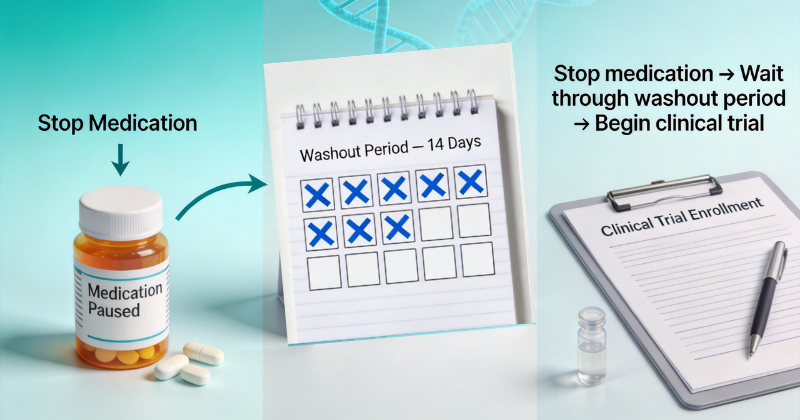
    “Participants must complete a 14-day washout period before enrollment.”

    Suddenly, questions start racing.

    Do I need to stop my current medication?
    Is that safe?
    Will I still qualify?

    If you are considering trial participation, understanding the washout period can help you make informed and confident decisions. This guide explains what is a washout period in clear, simple language without overwhelming medical jargon.

    What is a Washout Period?

    A washout period is a planned amount of time during which a participant stops taking certain medications before starting a clinical trial.

    In simple terms, it is a clearing period that allows previous drugs to leave your body before a new study treatment begins.

    Educational resources explain that a medication washout helps ensure earlier treatments do not interfere with study results. Major clinical research registries include washout periods as part of official trial protocol terminology, highlighting how standardized this process is in research.

    The washout period is not random. It is carefully calculated and built into trial participation requirements to support both safety and accurate study results.

    Why a Washout Period Matters in Clinical Trials

    Clinical trials must produce reliable data. If someone begins a study while another medication is still active in their system, researchers may not know which drug is responsible for:

    • Improvements
    • Side effects
    • Lab changes
    • Symptom differences

    Federal clinical trial design guidance emphasizes controlling variables in research studies to ensure reliable results. A washout period helps reduce overlapping drug effects and improves clarity in study outcomes.

    Washout periods are particularly important in:

    • Early clinical trial phases such as Phase 1 and Phase 2
    • Trials testing new drug classes
    • Studies measuring specific symptom or laboratory changes

    Without a proper washout period, results may become difficult to interpret.

    How Drug Clearance Time Works

    To understand the washout period, it helps to understand drug clearance time.

    Every medication has something called a half-life. A half-life is the time it takes for half of a drug to leave your bloodstream.

    For example:

    • If a drug has a 24-hour half-life, after 24 hours only 50 percent remains.
    • After another 24 hours, 25 percent remains.

    Most medications require about 4 to 5 half-lives to be mostly cleared from the body. This is why washout period timelines differ from one medication to another.

    A medication washout may last:

    • 48 hours
    • 1 to 4 weeks
    • Longer for long-acting medications

    Drug clearance time depends on:

    • Liver and kidney function
    • Dosage
    • Duration of use
    • Individual metabolism

    The washout period is based on pharmacology and safety science and not guesswork.

    5 Essential Facts About a Medication Washout

    1. A Washout Period Protects Your Safety

    The primary purpose of a washout period is safety.

    Stopping one medication and immediately starting another could increase the risk of:

    • Drug interactions
    • Unexpected side effects
    • Altered treatment response

    The washout period gives your body time to stabilize before introducing the investigational treatment.

    2. Not Every Trial Requires a Washout Period

    Some studies allow stable background medications.

    Others require a medication washout only for specific drug categories.

    Washout requirements depend on:

    • The condition being studied
    • The investigational therapy
    • Clinical trial phases
    • Trial participation requirements

    Reviewing eligibility criteria carefully is important before expressing interest.

    3. You Will Not Be Asked to Stop Medication Without Medical Supervision

    A washout period does not mean stopping medication on your own.

    If a medication washout is required:

    • The research team evaluates your safety
    • Your treating physician may be consulted
    • A tapering plan may be created if needed
    • Monitoring is provided

    Participant safety is always the top priority in ethical clinical research.

    4. Washout Periods Can Affect Scheduling

    A washout period may impact when you can officially enroll.

    It might:

    • Delay study start by 1 to 4 weeks
    • Require additional screening visits
    • Include lab testing before and after drug clearance time

    If you are balancing work, family responsibilities, or caregiving, knowing this timeline early helps you plan realistically.

    5. Washout Requirements May Affect Clinical Trial Eligibility

    In some cases, washout timing determines whether you qualify.

    For example:

    • If your medication cannot be safely stopped
    • If symptoms worsen during the washout period
    • If enrollment closes before your medication washout ends

    These factors can influence clinical trial eligibility.

    Clear eligibility disclosure helps you avoid surprises.

    Washout Periods and Clinical Trial Phases

    Washout periods are more common in early clinical trial phases, especially Phase 1 and Phase 2.

    In Phase 1 studies, researchers are often studying a drug in humans for the first time. Because of this, investigators want to make sure that no other medications are influencing the results. A washout period helps create a clean starting point so researchers can understand how the investigational drug behaves in the body.

    Phase 2 trials also frequently use washout periods. These studies focus on how well a treatment works for a specific condition and what side effects might occur. If previous medications remain active in the body, it becomes difficult to determine whether improvements or side effects are related to the study treatment.

    In later Phase 3 trials, researchers may sometimes allow background medications depending on the study design and the condition being studied. By this stage, the treatment has already been studied for safety and dosing. Researchers may focus more on comparing the treatment with existing therapies or evaluating how it performs in larger groups of patients.

    Even in Phase 3 trials, however, washout periods may still be required for certain medications that could interfere with the study results. Each trial defines its own washout requirements based on the treatment being studied, the condition involved, and participant safety considerations.

    Final Thoughts: Making Confident Decisions About a Washout Period

    A washout period is not meant to create barriers. It exists to protect your safety and ensure accurate scientific results.

    Understanding what is a washout period, how drug clearance time works, and how medication washout affects clinical trial eligibility empowers you to ask informed questions:

    • Is it safe for me to pause my medication?
    • How long will the washout period last?
    • How does it affect my schedule?
    • What are the full trial participation requirements?

    After checking eligibility details, always discuss any potential trial and its washout requirements with your treating doctor before making changes to your medication.Clinical research depends on informed volunteers. When the washout period and eligibility criteria are clearly explained, participation becomes a thoughtful decision and not a confusing one.

    Wondering what a washout period means for your schedule? Find transparent, clearly explained trials on DecenTrialz.

  • How Patient Advocacy Groups Help People Navigate Clinical Trials

    How Patient Advocacy Groups Help People Navigate Clinical Trials

    Patient advocacy in clinical research plays an important role in helping individuals understand research opportunities, find support, and navigate complex healthcare decisions.
    For many patients, caregivers, and families, the idea of joining a clinical trial can feel confusing or intimidating. Questions about safety, eligibility, time commitment, and trust often arise early. Patient advocacy groups help address these concerns by offering clear information, emotional reassurance, and practical guidance grounded in lived experience.

    Unlike sponsors or research sites, advocacy organizations focus on patient needs first. Their involvement helps individuals feel supported rather than pressured, allowing people to explore clinical research at their own pace and on their own terms.

    In patient advocacy clinical trials, advocacy groups help patients better understand what participation may involve before making a decision.

    What Are Patient Advocacy Groups?

    Patient advocacy groups are nonprofit or community-based organizations formed to support individuals affected by specific medical conditions, rare diseases, or broader health challenges. These groups are often led or informed by patients, caregivers, and families who understand the realities of living with a condition.

    In the context of patient advocacy groups clinical trials, their role is educational and supportive. They help explain how clinical research works, what participation may involve, and how trials fit into overall care. Patient advocacy groups involved in clinical trials are independent from sponsors and research sites. They do not run studies, approve treatments, or influence enrollment decisions.

    This independence helps build trust and ensures that information shared with patients remains balanced and patient-focused.

    How Advocacy Groups Support Clinical Trial Participation

    One of the most valuable contributions advocacy groups make is helping patients understand clinical research in clear, everyday language. Many people encounter clinical trials for the first time during stressful or uncertain moments in their health journey. Advocacy organizations help by answering common questions, explaining terminology, and clarifying what participation may realistically involve.

    Support often comes through peer conversations and support groups, where individuals can hear from others who have faced similar decisions. These shared experiences help reduce anxiety and remind patients they are not alone. Rather than promoting participation, advocacy groups focus on helping individuals feel informed and confident, regardless of whether they choose to join a trial.

    Connecting Patients to Clinical Trial Networks

    Patient advocacy organizations often collaborate with clinical trial networks to improve awareness of research opportunities. These collaborations help ensure that patients learn about trials earlier and from sources they already trust.

    Advocacy groups may share general information about ongoing studies, explain why certain research is being conducted, or guide patients toward reliable platforms where trials are listed. This approach supports transparency and allows patients to explore options without feeling rushed or recruited.

    By strengthening connections between patient communities and research networks, advocacy organizations help make clinical trials more visible and accessible.

    Community Outreach and Building Trust

    Effective community outreach is central to patient advocacy efforts. Many communities, including those affected by rare diseases or underserved populations, have historically had limited access to clinical research information.

    Advocacy groups help address these gaps by engaging directly with communities, listening to concerns, and reducing barriers such as language challenges, limited awareness, or past mistrust. Because these organizations are often built by people with lived experience, they communicate with empathy and credibility.

    This trust-based approach helps patients feel respected and heard, which is essential when considering participation in research.

    What Advocacy Groups Do and Do Not Do

    Understanding boundaries helps patients feel more confident when engaging with advocacy organizations.

    Advocacy groups do provide education, emotional support, and practical insights. They help patients prepare questions for healthcare providers and better understand what clinical trials may involve.

    They do not pressure individuals to participate, replace medical advice, or guarantee eligibility or outcomes. Decisions about clinical trial participation should always involve discussions with qualified healthcare professionals. Advocacy groups exist to support informed decision-making, not to influence personal choices.

    How Advocacy Groups Help Patients Decide If a Trial Is Right

    Choosing whether to join a clinical trial is a personal decision shaped by health needs, daily responsibilities, and individual priorities. Advocacy groups help by sharing lived experiences, discussing practical considerations, and encouraging thoughtful conversations.

    Hearing from others who have participated in research can offer helpful context. For some individuals, this early clarity feels like an instant match, allowing them to quickly recognize whether a study aligns with their situation. For others, it helps confirm that participation may not be the right choice at that time.

    In both cases, the goal is clarity, not persuasion.

    Finding Trials Through Advocacy-Supported Channels

    Patients exploring clinical research should rely on trusted and transparent information sources, especially when looking for studies that may be appropriate for their condition. Advocacy-supported channels help ensure that trial details are accurate, clearly explained, and shared with patient needs in mind.

    In many cases, patient advocacy groups work alongside patient recruitment platforms to improve trial awareness and access. Advocacy organizations help raise awareness and guide patients toward credible trial listings, while recruitment platforms provide structured listings and condition-based matching. Together, this approach helps individuals identify relevant clinical trials, understand basic eligibility requirements, and prepare informed discussions with healthcare providers, while maintaining voluntary and informed participation.

    How DecenTrialz Works With Advocacy Organizations

    DecenTrialz works alongside patient advocacy groups to support awareness and understanding of clinical research. By engaging with advocacy organizations, DecenTrialz helps patients discover relevant clinical trials while reinforcing informed and voluntary participation.

    Those interested in learning more can explore related articles in the DecenTrialz blog or learn about the platform’s mission and values on the About Us page.

  • Site Selection in Clinical Trials: Strategic Planning in the Age of Decentralization

    Site Selection in Clinical Trials: Strategic Planning in the Age of Decentralization

    Site selection in clinical trials has entered a new phase as decentralized and hybrid models reshape how sponsors evaluate research sites across geographies, infrastructure, and operational readiness. What was once a largely experience-driven decision is now a strategic planning activity that directly influences enrollment predictability, operational risk, and trial timelines.

    As trial designs expand beyond traditional site-based execution, sponsors are expected to evaluate not only investigator experience but also how well sites can support distributed workflows, digital engagement, and participant readiness. In this environment, site selection has become a core component of risk management and execution strategy rather than a standalone operational step.

    Traditional Approaches to Clinical Trial Site Selection

    Historically, clinical trial site selection focused on retrospective indicators. Sponsors prioritized sites with strong recruitment history, consistent enrollment performance, and investigators who had previously managed similar protocols.

    Enrollment speed, screen success rates, and investigator experience were often the primary decision drivers. These factors worked well in fully site-based trials where patient access, visit schedules, and data collection methods were relatively stable.

    However, this approach assumed that past performance alone could predict future success, offering limited insight into how sites would perform under evolving trial models.

    Why Site Selection is Changing

    Decentralized and hybrid trial models have expanded the scope of site evaluation. Sponsors must now assess whether sites can support remote interactions, digital workflows, and participant engagement outside the physical clinic.

    Geographic reach has widened, but with it comes greater operational dependency. Sites are expected to coordinate telehealth visits, manage home-based services, and maintain consistent oversight across distributed activities. These expectations have shifted site selection toward forward-looking readiness assessments rather than historical comparisons.

    As a result, site selection decisions increasingly determine whether decentralized trial designs are operationally viable.

    Key Factors in Modern Site Selection in Clinical Trials

    Modern site selection in clinical trials require sponsors to evaluate operational capabilities alongside traditional performance metrics. Telehealth readiness, digital consent workflows, and remote data capture capabilities are now essential considerations.

    Sponsors also assess whether sites have the infrastructure and trained staff to manage hybrid execution without increasing protocol deviations or data quality risk. Logistics coordination, including sample handling and home-visit support, further differentiates site readiness.

    In addition, access to local healthcare networks and referral pathways plays a growing role, particularly for studies that depend on broader or more diverse participant populations.

    Investigator Selection in Decentralized and Hybrid Trials

    Despite changes in trial execution models, investigator selection remains central to trial success. Investigators are responsible for protocol oversight, participant safety, and data integrity across both on-site and remote activities.

    In decentralized and hybrid trials, investigators must demonstrate adaptability, clear communication practices, and comfort with digital oversight tools. Their ability to manage distributed teams and respond to real-time operational signals directly influences site performance.

    Strong investigator leadership helps ensure that operational complexity does not translate into execution risk.

    The Impact of Site Selection on Patient Recruitment

    Site readiness has a direct impact on patient recruitment outcomes. Sites that lack operational flexibility or digital coordination often experience slower enrollment, higher screen failure rates, and increased participant attrition.

    In patient recruitment in clinical trials, participant experience is closely tied to how effectively sites manage communication, scheduling, and expectations. Sites that support reduced travel burden and timely engagement tend to see stronger retention and adherence.

    Many recruitment challenges can be traced back to early site selection decisions, highlighting the importance of evaluating readiness beyond historical metrics.

    Aligning Site Selection With Recruitment Strategy

    Effective clinical trial recruitment begins with alignment between site selection and enrollment strategy. Sponsors increasingly assess whether sites have access to the target population and the operational capacity to support projected recruitment timelines.

    Early feasibility assessments help identify mismatches between protocol demands and site capabilities before activation. This proactive approach allows sponsors to address risks early rather than responding to delays after enrollment begins.

    When site selection and recruitment planning are aligned, sponsors gain greater predictability and control over trial execution.

    The Role of Data and Dashboards in Site Selection

    Data visibility now plays a central role in site selection decision-making. Sponsors rely on dashboards to gain comparative insights into enrollment trends, screening efficiency, and recruitment progress across active studies. These views support earlier understanding of whether enrollment assumptions align with real-world conditions.

    Early feasibility alignment signals, including pre-screening data and enrollment responsiveness, help sponsors assess readiness before recruitment accelerates. As trials progress, real-time tracking of screening outcomes and participant flow enables earlier identification of emerging risks and timely course correction.

    This continuous feedback approach shifts site selection from a one-time planning activity into an actively monitored process that supports more predictable trial execution.

    Recruitment Readiness as a Component of Strategic Site Selection

    Recruitment readiness increasingly influences site selection outcomes, even when sponsors have predefined site networks. Structured pre-screening processes help ensure that participants entering the pipeline are informed, aligned, and prepared before referral to research sites.

    Clear presentation of study requirements, guided eligibility questions, and early confirmation of participant understanding reduce downstream screening inefficiencies. Clinical follow-up conversations further support alignment by clarifying expectations and readiness before site involvement.

    By improving participant preparedness before referral, recruitment readiness supports smoother site workflows, more stable enrollment patterns, and stronger alignment between site selection decisions and real-world recruitment performance.

  • What is the FDA? What Does FDA Do in Clinical Trials?

    What is the FDA? What Does FDA Do in Clinical Trials?

    FDA in clinical trials refers to the regulatory role played by the U.S. Food and Drug Administration (FDA) in ensuring the safety, integrity, and ethical conduct of drug development in the United States.

    Clinical trial sponsors operate in a complex regulatory environment. Understanding the FDA’s role in clinical trials is crucial for success. The U.S. Food and Drug Administration (FDA) oversees drug development to ensure patient safety and data integrity. Sponsors must navigate requirements like filing an Investigational New Drug (IND) application, adhering to Good Clinical Practice (GCP) guidelines, and meeting all regulatory milestones on the path to FDA approval.

    FDA’s Role in Clinical Trials

    The FDA plays a pivotal role in every U.S. clinical trial, acting as the guardian of participant safety and the credibility of trial data. By law, any new drug must be authorized by the FDA before it can be tested in humans or distributed across state lines. A sponsor cannot legally ship an investigational drug to trial sites without an approved IND – the IND serves as an exemption allowing the trial to proceed. FDA oversight begins at the moment a drug is ready to enter human testing. From that point on, the FDA’s mission is to ensure that the trial is conducted ethically and that the evidence collected will reliably demonstrate the drug’s safety and efficacy.

    How does the FDA enforce these standards? Primarily through a framework of regulations and guidance. The FDA requires sponsors and investigators to comply with applicable statutes and regulations intended to protect the rights, safety, and welfare of participants and to ensure data quality. Key FDA regulations cover everything from informed consent and Institutional Review Boards (IRBs) to IND applications and safety reporting.

    IND Application – The First Step toward FDA Approval

    For sponsors, the journey toward FDA approval officially begins with the Investigational New Drug (IND) application. The IND is a comprehensive dossier submitted to the FDA before starting any clinical trial of a new drug or biologic. Its purpose is to demonstrate that it’s reasonable to proceed with human testing.

    What does an IND include?

    • Preclinical Data (Animal Pharmacology and Toxicology)
    • Manufacturing Information
    • Clinical Protocols and Investigator Information

    Once the IND is submitted, a sponsor must wait 30 days before initiating the trial. During this 30-day FDA review period, the agency evaluates the IND for safety. If there are serious concerns, the FDA can issue a clinical hold.

    Pro Tip: Engage with the FDA early. The FDA encourages sponsors to use its Pre-IND Consultation Program, which allows for early communication with FDA reviewers. Studying relevant FDA guidance documents is invaluable.

    GCP Compliance and Sponsor Responsibilities

    Filing an IND is just the beginning. Once your trial is underway, Good Clinical Practice (GCP) principles govern the conduct of the study. GCP is an international ethical and scientific quality standard for designing, conducting, recording, and reporting trials.

    Key sponsor responsibilities under FDA regulations:

    • Select qualified investigators
    • Provide necessary information to investigators
    • Ensure proper monitoring of the trial
    • Conduct the study according to protocol
    • Maintain an effective IND
    • Inform the FDA and investigators of new adverse effects or risks

    GCP compliance also includes ensuring that informed consent is obtained and that an Institutional Review Board (IRB) reviews and approves the study.

    As a sponsor, ensuring that trial participants are appropriately pre-screened and referred can significantly impact the quality and compliance of your study. DecenTrialz enables a structured pre-screening and referral workflow that aligns with regulatory expectations. Protocol criteria are transformed into a guided format, participants complete eConsent digitally, and a registered nurse follows up to validate study-related details. Only qualified individuals progress, resulting in a more efficient, compliant, and site-ready handoff that supports your regulatory and operational goals.

    From IND to FDA Approval: Regulatory Pathway

    1. Clinical Trial Phases (Phase 1–3): Conducted with FDA oversight, these studies evaluate safety, dosage, and efficacy. Sponsors must submit annual IND reports and monitor for adverse events throughout.
    2. Ongoing FDA Oversight: Includes required updates such as protocol amendments, safety reports, and communication with FDA through formal milestone meetings (e.g., End-of-Phase 2).
    3. New Drug Application (NDA) or Biologics License Application (BLA): After completing Phase 3, sponsors submit an NDA (for drugs) or BLA (for biologics). This comprehensive application includes all preclinical and clinical trial data, proposed labeling, safety updates, and manufacturing information. The NDA is mandatory for gaining FDA marketing approval in the U.S.
    4. FDA Review and Decision: The FDA thoroughly evaluates the NDA or BLA over a 10–12 month review period. This includes expert analysis of trial data, inspection of manufacturing sites, and assessment of risk-benefit profiles. The FDA may approve, issue a Complete Response Letter (CRL), or request additional information.

    Proactive sponsors stay engaged with FDA officials and use formal meetings (e.g., Pre-IND, End-of-Phase2) to align with regulatory expectations.

    Navigating Your Clinical Trial Roadmap

    Successfully navigating FDA requirements is a challenging but essential task for sponsors. Understanding the FDA’s role, meeting IND and GCP requirements, and preparing for each regulatory milestone will help ensure your clinical trial is conducted ethically, efficiently, and effectively. Stay informed with the latest FDA guidance documents, and consult regulatory experts when needed to strengthen your path to approval.

    Successfully navigating FDA requirements is a challenging but essential task for sponsors. Understanding the FDA’s role, meeting IND and GCP requirements, and preparing for each regulatory milestone will help ensure your clinical trial is conducted ethically, efficiently, and effectively. Stay informed with the latest FDA guidance documents, and consult regulatory experts when needed to strengthen your path to approval, or explore FDA’s Drug Development Resources for deeper insights.

  • Patient Advocacy and AI: Connecting Communities to Trials

    Patient Advocacy and AI: Connecting Communities to Trials

    Patient advocacy and AI are transforming how people discover, understand, and join clinical trials. Every new treatment begins with individuals and families who decide to take part in research, often motivated by the chance to improve healthcare for others as well as themselves.

    Advocacy groups help make this possible. They translate complex scientific information into something patients can understand and trust. They explain what clinical trials are, how participation works, and what potential benefits and risks exist. For many people, advocates are the first link between curiosity and confident participation.

    Still, many who could qualify for research never hear about these opportunities. Finding the right trial, meeting eligibility criteria, and feeling comfortable enough to participate can be challenging. That is where responsible technology plays a role.

    When used thoughtfully, patient advocacy and AI together help connect people to the studies that matter to them, improve outreach efforts, and make clinical research more inclusive.

    1. The Real Role of Advocacy in Clinical Research

    Advocacy ensures that patient voices are included in every stage of medical research.

    Advocates raise awareness, support families, and help researchers understand what matters most to patients. They also make trial information easier to grasp by simplifying complex terms and explaining the process clearly.

    Without these groups, clinical research would remain difficult for many to access. Advocacy gives people the confidence to explore options that might otherwise seem out of reach.

    2. Why Many Communities Still Miss Out

    Even with progress in digital communication, there are still barriers that prevent patients from joining trials.

    Some of the most common challenges include:

    • Limited awareness: Many patients never learn that studies exist or that they qualify.
    • Accessibility: Research centers are often located far from smaller communities.
    • Complex language: Technical terminology can discourage participation.
    • Mistrust: Concerns about data use and privacy still affect decision-making.

    Addressing these issues requires more than just technology; it takes cooperation between advocacy groups, researchers, and healthcare professionals to reach people where they are.

    3. How Technology Supports Advocacy

    Modern data systems can help advocacy organizations work more efficiently without losing their personal touch.

    Patient advocacy and AI together can identify where certain health conditions are more common, track studies that are currently recruiting, and organize this data for easy sharing.

    Instead of manually searching through multiple registries, advocates can use technology to quickly find accurate information and guide patients to appropriate trials. AI handles data management while people focus on relationships and communication.

    4. Making Clinical Information Easy to Understand

    Scientific details can often feel overwhelming. Terms such as “randomized,” “double-blind,” or “placebo-controlled” can make clinical trials sound complicated or intimidating.

    AI-based tools can help simplify this information by creating summaries or visual explanations that clearly describe who the study is for, where it takes place, and what participation involves.

    When information is simple and transparent, patients are more likely to ask questions, talk to their doctors, and make decisions confidently.

    5. Using Data to Improve Diversity in Research

    Diversity in clinical research ensures that medical findings apply to everyone. Studies that include participants from different backgrounds provide more accurate, meaningful results.

    AI can analyze enrollment patterns and identify underrepresented populations. Advocacy groups can use these insights to plan outreach in areas where awareness or access is low.

    By aligning patient advocacy and AI, research becomes more balanced and representative of the real world.

    6. Building Trust Through Transparency

    Trust is the foundation of clinical participation. Patients need to know that their data is protected and used responsibly.

    Advocacy groups can strengthen that trust by working with technology platforms that prioritize data security and compliance. Explaining how information is collected, stored, and used helps patients feel more comfortable sharing it.

    Clear communication keeps participants informed and reassured throughout the process.

    7. The Role of DecenTrialz

    At DecenTrialz, our goal is to make research more accessible and transparent for everyone.

    The platform connects advocacy groups, Sponsors, and research sites through verified data and reliable search tools. It simplifies how communities find active studies and helps research teams identify where additional outreach is needed.

    By combining the strengths of patient advocacy and AI, DecenTrialz is helping research partners build stronger, faster, and more inclusive connections.

    8. Looking Ahead

    As healthcare continues to evolve, patient advocacy and AI will remain central to making research more inclusive and efficient.

    Technology can manage data, predict needs, and simplify complex information, but people are the ones who turn that information into meaningful progress.

    When advocates, researchers, and technology teams work together, clinical trials become easier to access, easier to understand, and more representative of the communities they serve.

    Progress in clinical research depends on collaboration. Researchers bring science and structure, while advocacy groups bring awareness and understanding.

    When these efforts come together with the support of responsible technology, clinical trials reach more people and deliver better outcomes.

    At DecenTrialz, we continue to focus on making research participation simpler, safer, and more connected for everyone involved.