
Author: Deeksha Gitta

  • The Hidden Cost of Slow Recruitment in Clinical Trials: Why Time-to-First-Patient Matters

    The Hidden Cost of Slow Recruitment in Clinical Trials: Why Time-to-First-Patient Matters

    Time is more than just money in clinical trials; it’s also a market opportunity. The time-to-first-patient (TFP) countdown starts as soon as a protocol is approved. This is the number of days that pass between site activation and the first participant’s enrollment.

    Because a slow start frequently indicates a slow enrollment, sponsors and CROs keep a close eye on TFP. The entire trial period may exceed budget, postpone market entry, and even reduce the therapy’s competitive edge if it takes months to find the first patient.

    The True Cost of Delays

    Every day without a participant enrolled in the study can impact budgets and outcomes:

    Budget overruns include increased project management fees, higher monitoring expenses, and longer site staffing.

    Opportunity cost: The later a therapy enters the market, the shorter the time before competitors arrive or patent exclusivity ends.

    Regulatory risk: Delays might require protocol revisions or reapprovals, which would further slow down the process.

    Nearly 80% of clinical trials miss their enrollment deadlines, according to a Tufts Center for the Study of Drug Development analysis. Slow TFP is frequently the first indication of an approaching hiring crisis.

    Why Clinical Trial Recruitment Starts Slowly

    A number of recurring factors slow down the hiring process:

    Restrictive eligibility: The pool of possible participants is reduced by strict inclusion/exclusion criteria.

    Geographical barriers: Participation is discouraged by long travel distances or relocation requirements.

    Site resource limitations: Some research sites don’t have technology tools or specialized recruitment staff.

    Low patient awareness: A lot of patients are unaware that they can participate in trials.

    Without early planning, these barriers can keep trials stalled at zero participants for weeks or months.

    How Clinical Trial Recruitment Platforms Help

    The speed at which the first patient is enrolled is being changed by clinical trial finder platforms. These tools use criteria like diagnosis, location, and trial phase to match eligible participants to ongoing studies.

    Electronic Health Record (EHR) databases are frequently integrated with modern platforms to expedite the process of identifying eligible patients.

    Patient advocacy organizations should reach out to reliable networks.

    Digital campaigns that are specifically targeted to underrepresented groups.

    Some patient-focused companies, including those using pre-screening and matching tools like DecenTrialz (which does not conduct trials but connects patients with research sites), are showing how technology bridges the gap between eligible participants and active studies. The result? Shorter TFP without sacrificing compliance or safety

    Compliance and Patient Safety

    Recruitment tools are only effective if they operate within strict IRB or Ethics Committee–approved protocols and HIPAA privacy standards. This means:

    Patient data must be stored and transmitted securely.

    Consent procedures to be clear and simple to understand.

    Outreach should never take place without first undergoing ethical and legal review.

    A platform that speeds up recruitment but violates privacy rules risks regulatory shutdowns—which can delay a trial far longer than slow enrollment ever would.

    Best Practices to Improve Recruitment Efficiency

    Trial teams need to stick to proven techniques to maintain TFP short even with the best technology:

    Prior to human outreach, pre-screening automation removes patients who are not eligible.

    Reach a wider range of patient communities with multilingual outreach.

    Patients can pre-qualify without physically visiting a location,thanks to remote eligibility checks.

    Real-time recruitment analytics: Modify campaigns according to what is effective and the locations of bottlenecks.

    Multilingual outreach alone can boost recruitment rates by up to 20% in international studies, according to one industry report. This is a big impact when every day counts.

    More Than Just Money: Quicker Recruiting Resulted in Quicker Patient Access

    Faster TFP means less financial strain for sponsors. Patients will have faster access to potentially life-saving treatments as a result. Therefore, establishing trust and removing obstacles should be the main goals of contemporary recruitment strategies, whether they are implemented locally or through technological platforms.

    Platforms such as DecenTrialz, which links patients with research sites without conducting trials, and others in the field show that speed, privacy, and compliance can all coexist. Trials are more likely to conclude on schedule, within budget, and with significant results when they get off to a strong start.

    In addition to being a scheduling annoyance, slow recruitment has hidden costs that impact patient care, market access, and budgets. There will be quantifiable benefits for sponsors and sites that put lowering TFP first through careful planning, tech-enabled matching, and compliant outreach.

    The first patient enrolled may set the pace for the entire trial in a competitive clinical research environment. Results and possible new treatments may reach those who need them most quickly if the patient is enrolled as soon as possible.
  • Reducing Clinical Trial Screen Failures : How Sites Can Improve Eligibility Matching

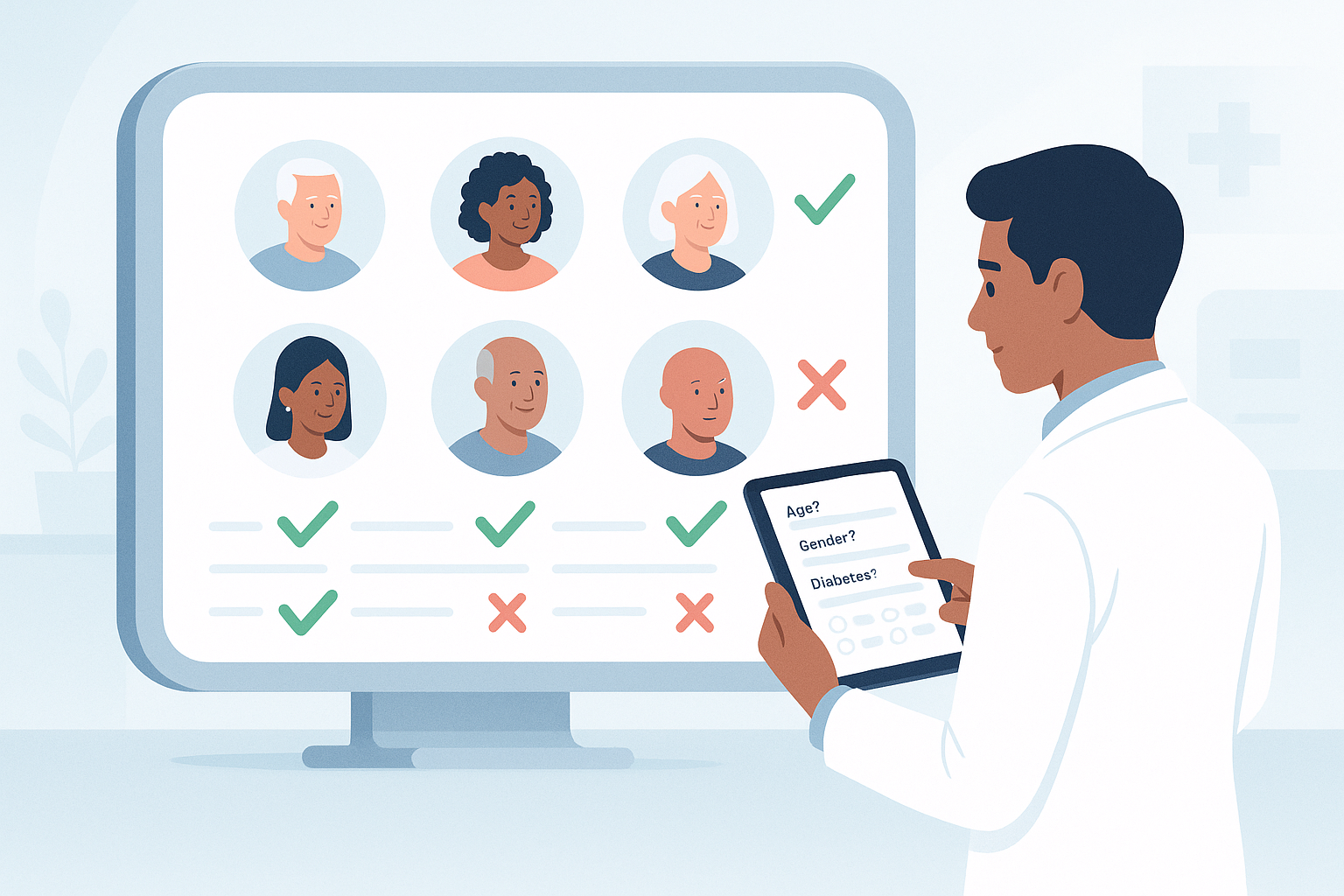
    Reducing Clinical Trial Screen Failures : How Sites Can Improve Eligibility Matching

    Clinical trial screen failures occurs when a potential participant begins the screening process but does not meet the eligibility requirements to continue in the trial. This might happen after signing consent or even after completing some assessments. Screen failures are common, and depending on the study, can range anywhere from 20 percent to more than 70 percent of those initially screened.

    The impact of these failures is significant. For sponsors, every screen failure represents lost time and money. Delays in enrollment can cost hundreds of thousands of dollars per day, pushing back timelines for life-saving therapies. For sites, the burden falls on staff who invest time in patients who ultimately cannot enroll. For participants, the experience can be frustrating, traveling, sharing personal information, and investing hope only to be told they are not eligible. Over time, this erodes trust in research and makes people less likely to consider future trials.

    High screen failure rates are not just an inconvenience. They are a real threat to trial efficiency, data quality, and participant goodwill.

    Root Causes of Clinical Trial Screen Failures

    Several common issues drive clinical trial screen failures across clinical sites:

    • Weak pre-screening workflows: If interested patients are brought in for full visits without any filtering, many will be turned away at the clinic door.
    • Incomplete communication of eligibility criteria: Recruitment awareness campaigns or outreach that are vague or oversimplified attract many ineligible patients.
    • Limited digital pre-qualification tools: Without online or automated pre-screeners, obvious mismatches are often not identified until late in the process.
    • Heavy reliance on manual checks: Busy coordinators can make errors or take chances on borderline cases, leading to unnecessary screenings.

    These issues often combine to create high screen failure rates, even in otherwise well-run studies.

    Practical Solutions for Better Matching

    The good news is that sites can take actionable steps to reduce screen failures. By adopting smarter workflows and technology, they can ensure that more participants who reach the clinic are genuinely eligible.

    1. Use digital pre-screeners with adaptive logic. Online questionnaires that guide participants through tailored questions can quickly identify obvious exclusions. This saves time for both the site and the patient.
    2. Communicate criteria clearly. Ads and outreach materials should explain the most important eligibility requirements in plain language. Transparency allows participants to self-select and reduces frustration.
    3. Train site staff thoroughly. Coordinators and investigators should be confident in applying criteria and empowered to stop unsuitable candidates early. Clear SOPs, checklists, and regular training make a difference.
    4. Integrate EMR/EHR data securely. Sites with access to electronic health records can identify likely candidates before outreach. When done in compliance with HIPAA and IRB approvals, this reduces wasted screenings and improves targeting.
    5. Adopt decentralized tools and dashboards. eConsent platforms, telehealth pre-screens, and real-time analytics dashboards reduce burden on patients and help sites monitor where candidates are dropping out.

    Together, these strategies shift screening from reactive to proactive, ensuring that only high-potential candidates move forward.

    A Participant-First Approach

    Eligibility matching should not only be efficient but also participant-centric. Sites can build trust and improve retention by making screening as respectful and transparent as possible.

    • Minimize burden. Offer flexible scheduling, combine procedures into fewer visits, and use telehealth or home health visits when possible.
    • Be transparent about criteria. Explain why certain requirements exist, whether for safety or scientific validity. Participants are more understanding when they know the reasons behind exclusions.
    • Provide guidance. Share preparation materials before screening and keep communication open. If someone is not eligible, explain it gently and, if appropriate, let them know they may be contacted for future studies.

    When participants feel informed and respected, even a screen failure can leave them with a positive impression of clinical research.

    Industry Best Practices

    Across the U.S., leading research sites have shown that high screen failure rates can be reduced with smart strategies:

    • Layered pre-screening: Combining digital questionnaires, phone calls, and EHR checks before an on-site visit helps sites focus on the most qualified candidates.
    • Data-driven insights: Tracking why participants fail allows sites to adjust outreach strategies and refine eligibility reviews over time.
    • Technology platforms: Solutions like DecenTrialz help sites automate pre-screening, match participants to trials in real time, and provide unified dashboards for sites and sponsors. These HIPAA-compliant platforms reduce manual work, improve transparency, and make the entire process more participant-friendly.

    Moving Forward

    High screen failure rates do not need to be accepted as the cost of doing research. By improving eligibility matching in trials, sites can cut costs, accelerate timelines, and protect participant trust. Smarter workflows, clear communication, and participant-first practices all contribute to reducing screen failures and strengthening the overall clinical trial process.

    If you are a clinical trial site or CRO, now is the time to rethink your approach. Invest in digital pre-screening tools, train your staff, and adopt HIPAA-compliant platforms that support both efficiency and participant care. Reducing screen failures is about more than saving money. It is about showing respect for volunteers and delivering on the promise of faster, better clinical research.

  • Clinical Trials Explained: Simple Guide for Beginners

    Clinical Trials Explained: Simple Guide for Beginners

    Clinical trials are essential for advancing medicine. They are how doctors and researchers discover better ways to prevent, diagnose, and treat illnesses. Many of the treatments we depend on today, such as vaccines and cancer drugs, exist because volunteers took part in clinical trials.

    If you have ever wondered what clinical trials involve, how they are designed, or whether joining one might be right for you, this article is a beginner’s guide that explains the basics in clear and simple terms.

    What Are Clinical Trials?

    Clinical trials are research studies that test whether a new medical approach, such as a drug, device, or therapy, is safe and effective for people. Researchers follow strict rules to measure how well a treatment works, monitor side effects, and protect the health of participants. A treatment can only be approved for public use after passing through these steps.

    Clinical trials help with:

    • Testing new treatments before they become widely available.
    • Comparing existing treatments to see which works best.
    • Understanding how different groups of people respond to the same treatment.

    People choose to join trials for many reasons. Some hope to improve their own health, while others want to contribute to medical progress. Many say volunteering gives them a sense of purpose, knowing their involvement may help future patients.

    How Safety Is Protected

    Before a trial begins, it is reviewed by an independent ethics committee called an Institutional Review Board (IRB). The IRB ensures that the study is ethical, fair, and designed to protect participants.

    Every participant must also provide informed consent. This means you will receive clear information about the study’s purpose, potential risks, expected benefits, and what participation involves. Only after reviewing this information and asking questions can you decide whether to join. Signing the consent form does not commit you permanently. You are free to leave the trial at any time.

    Privacy is also protected. Clinical trials in the United States must follow laws such as HIPAA, which safeguard your personal health information.

    Clinical Trial Phases Explained: Phase I to Phase IV

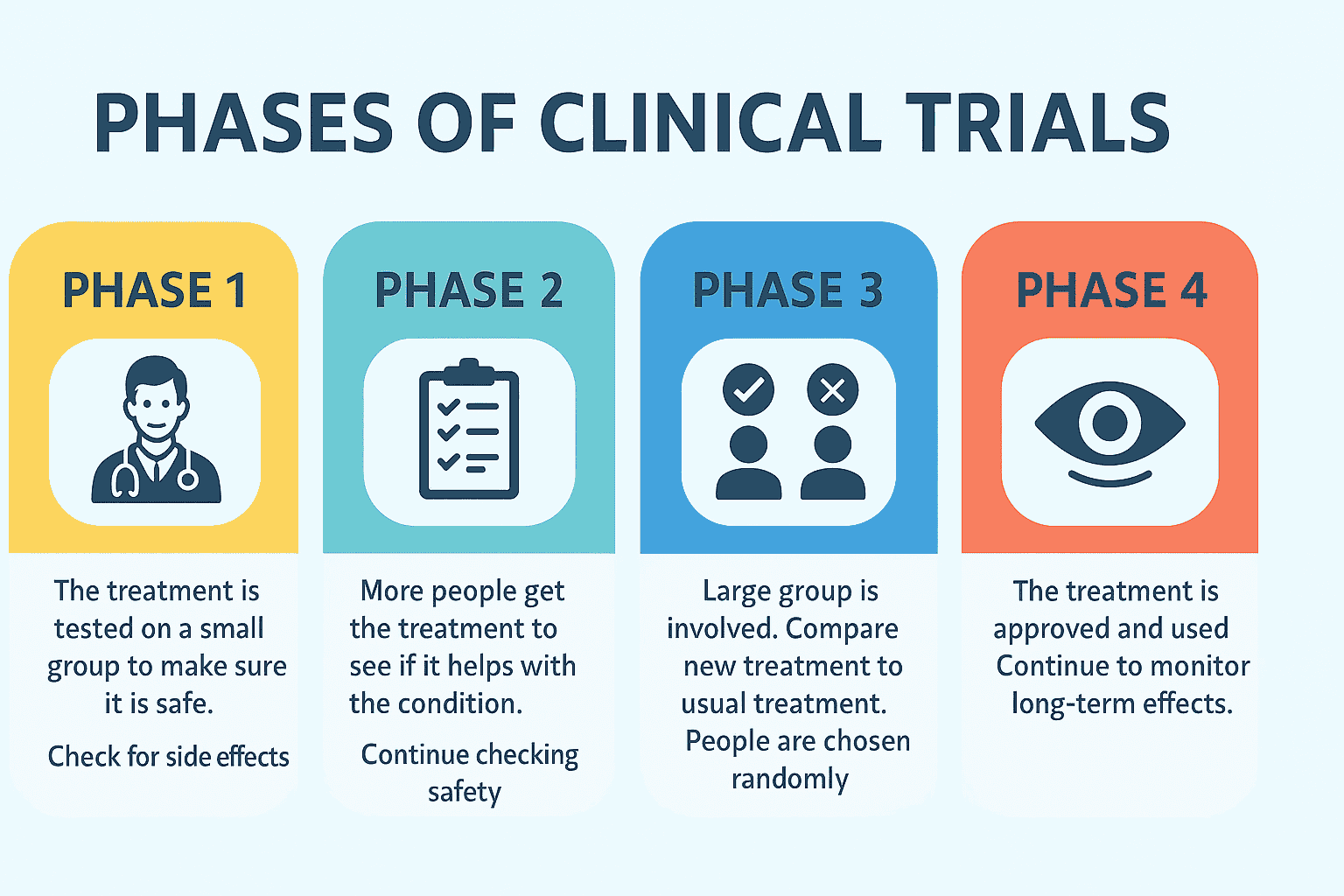
    One of the most important frameworks in clinical research is the system of clinical trial phases. The clinical trial phases explained model guides the development of new medical treatments from early safety testing to post-approval monitoring.

    Phase I: Safety and Dosage Evaluation

    Phase I trials represent the earliest stage of testing a new therapy in humans. The primary goal is to evaluate safety and determine appropriate dosage levels.

    Typical characteristics of Phase I studies include:

    • Small participant groups, often 20 to 100 individuals
    • Careful monitoring for side effects
    • Dose escalation to determine safe dosage ranges
    • Evaluation of how the treatment behaves within the human body

    Participants in Phase I trials may include healthy volunteers or patients with specific conditions depending on the therapy being studied.

    These trials help researchers understand how a treatment is absorbed, distributed, metabolized, and eliminated in the body.

    Phase II: Early Effectiveness Studies

    Phase II trials build upon safety data from Phase I studies and begin evaluating whether the treatment demonstrates effectiveness in a specific patient population.

    Phase II studies generally involve:

    • 100 to 300 participants
    • Continued safety monitoring
    • Evaluation of therapeutic response
    • Identification of optimal dosing strategies

    These trials help determine whether the therapy shows enough promise to move forward to larger confirmatory studies.

    Phase III: Large-Scale Confirmatory Trials

    Phase III trials represent the most comprehensive stage of the Phase I II III IV trial process.

    These studies typically involve hundreds or thousands of participants and are conducted across multiple research sites.

    Common characteristics include:

    • Comparison with existing standard treatments
    • Randomized study designs
    • Rigorous monitoring of safety and effectiveness
    • Multi-center trial execution

    Results from Phase III trials are often used by regulatory agencies when evaluating whether a therapy should be approved for broader clinical use.

    Phase IV: Post-Marketing Research

    After a therapy receives regulatory approval and becomes available to patients, Phase IV studies begin.

    These studies monitor treatments in real-world clinical settings and focus on:

    • Identifying rare or long-term side effects that may not appear in earlier trial phases
    • Evaluating effectiveness across broader populations
    • Studying long-term treatment outcomes

    Phase IV research plays a critical role in ensuring continued treatment safety and effectiveness after market approval.

    How Clinical Trials Are Designed

    Each clinical trial follows a detailed plan called a protocol. This document explains the study’s purpose, who can join, what treatments will be tested, how long the study will last, and how safety will be monitored.

    The IRB reviews the protocol before the trial begins to ensure participant protection. Trials must also comply with privacy rules such as HIPAA.

    Once approved, a research team led by a principal investigator oversees the study. This team often includes physicians, nurses, and coordinators who:

    • Recruit participants and explain the study.
    • Collect informed consent.
    • Monitor participants’ health.
    • Record data throughout the study.

    Some modern trials use decentralized or hybrid approaches. This means that not all activities happen at the hospital or clinic. For example, participants might attend telehealth visits, use wearables or apps to send health data from home, or receive study medication by delivery. These approaches make participation easier, especially for people who live far from research centers.

    Who Can Participate in a Clinical Trial?

    Not everyone qualifies for every trial. Eligibility is determined by criteria such as:

    • Age and gender.
    • Type and stage of a disease.
    • Previous treatments.
    • General health.

    For example, one cancer trial may accept only patients with a specific tumor type, while a diabetes trial may have blood sugar requirements.

    Diversity is also important. Researchers want trials to reflect real-world populations, so they aim to include people of different ages, races, and ethnicities. This ensures treatments are safe and effective for everyone.

    If you are interested, the research team will review your medical history and conduct tests to see if you qualify. If you do, you will then review and sign an informed consent form. Remember, participation is voluntary and you can leave the study whenever you choose.

    How to Find a Clinical Trial

    If you would like to explore clinical trials, here are common ways to start:

    • Talk with your doctor. They may know about trials related to your condition.
    • Search online. The U.S. government maintains a public database at ClinicalTrials.gov, where you can find thousands of ongoing studies.
    • Use a trial finder. For example, DecenTrialz provides a tool to search by location and condition.
    • Check patient advocacy groups. Organizations focused on conditions such as cancer or diabetes often share trial opportunities.

    When you find a trial, read its summary carefully, speak with the study contact, and discuss it with your doctor. They can help you decide if it is the right choice for you.

    Why Clinical Trials Matter for Patients

    Clinical trials are the foundation of medical progress. They make it possible to develop treatments that are safer, more effective, and more personalized.

    For participants, a trial can offer:

    • Access to expert medical care.
    • Early access to treatments not yet available to the public.
    • The chance to contribute to discoveries that could benefit others.

    Most importantly, clinical trials provide hope. Each volunteer helps move science forward and supports a healthier future. By choosing to participate, you are helping yourself and making a difference for patients everywhere.

  • Site Management in Clinical Trials: 4 Proven Ways to Boost Efficiency

    Site Management in Clinical Trials: 4 Proven Ways to Boost Efficiency

    Effective clinical trial site management is essential for improving research quality, reducing delays, and avoiding costly errors Many trials fall behind schedule due to site-level operational inefficiencies rather than inadequate science. Ineffective scheduling, ambiguous roles, or antiquated manual procedures can prolong research, raise expenses, and irritate participants.

    Conversely, a well-run research site produces quantifiable advantages. Sites with effective systems save time, cut down on errors, enhance the quality of the data, and provide a more seamless experience for participants and employees. Understanding how to increase clinical trial efficiency can be crucial, whether you are managing a study at one site or coordinating across several locations.

    The four tried-and-true methods listed below will help research sites perform at their best.

    1. Optimizing Site Workflow

    The foundation of effective site management is a well-organized workflow. Without defined procedures, employees frequently encounter bottlenecks that result in avoidable delays, such as overlapping tasks, redundant paperwork, or unclear communication. Mapping out the complete participant journey—from pre-screening calls to follow-up visits—and determining where tasks are delayed is the first step.

    Among the doable actions to streamline workflows are:

    Clear SOPs should be written for high-volume tasks like visit check-ins, informed consent, and eligibility screening. This reduces errors and establishes consistency.

    Make role-based checklists to ensure that everyone on the team is aware of their responsibilities at every turn, preventing misunderstandings or effort duplication.

    Have brief daily meetings to go over the agenda, identify any possible problems, and make sure all employees are on the same page. Significant disruptions can be avoided in just ten minutes.

    To give coordinators a real-time picture of site progress, use visual dashboards to track participant status and highlight past-due milestones.

    Sites can promptly detect delays and maintain visitation schedules by optimizing pre-screening, eligibility checks, and participant tracking. Staff members spend more time assisting participants and less time fighting fires when workflows are efficient.

    2. Leveraging Project Management Tools

    In essence, overseeing a clinical trial is overseeing a complicated project. Although they frequently work in silos, sponsors, labs, investigators, and site staff are all working toward the same objective. These moving components are brought together in one location by digital project management tools, especially when combined with a Clinical Trial Management System (CTMS).

    How efficiency is increased by project management tools:

    Setting deadlines for tasks guarantees accountability, and reminders help avoid bottlenecks.

    The team remains proactive through automated alerts for protocol updates, impending monitoring visits, or past-due documentation.

    By eliminating the need for dispersed emails, centralized communication facilitates the tracking of conversations and decisions.

    Stakeholders can see site progress and outstanding issues instantly thanks to real-time dashboards.

    Real-time visibility into participant enrollments, site visits, and task progress is available on DecenTrialz through the research sites dashboard. Site teams can view everything in one location rather than juggling spreadsheets or waiting for updates. In addition to saving time, this transparency increases sponsor and CRO trust in the site’s functionality.

    3. Effective Allocation of Resources

    Inadequate resource allocation can make even the best processes and tools ineffective. Poor scheduling, staff burnout, or supply shortages frequently cause studies to go awry and irritate participants. Effective use of time, personnel, and materials is ensured by prudent resource allocation.

    Among the resource management techniques are:

    To prevent last-minute understaffing, forecast participant enrollment and schedule employees in accordance with workload peaks.

    Employees should receive cross-training so they can fill in in various capacities as needed, giving the team flexibility.

    Use just-in-time inventory control to avoid serious study material shortages and cut expenses associated with overstocking.

    For unforeseen visits, urgent questions, or rescheduled participant check-ins, maintain flexible appointment times.

    Sites can more precisely manage supply inventory and forecast staffing needs by using real-time data from DecenTrialz. This prevents resource waste and enables sites to get ready for surges in participation. Participants receive more dependable care and staff satisfaction increases when resources are appropriately balanced.

    4. Automating Tasks Related to Administration

    One of the main factors reducing site efficiency is administrative workload. Instead of spending time interacting with participants or addressing trial issues, coordinators frequently spend hours chasing paperwork, setting up visits, or compiling reports. This load is lessened and human error is decreased by automating repetitive tasks.

    Examples of efficiency-boosting automation include:

    Automated scheduling systems that are connected to participant databases reduce no-shows by sending out email or text reminders.

    E-consent, or digital consent forms, expedite the procedure while guaranteeing that all necessary fields and signatures are always completed.

    Time is saved and consistency is maintained by using pre-made templates for visit packets, monitoring reports, or follow-up letters.

    Automated notifications for missing paperwork or training renewals stop compliance problems before they get out of hand.

    Sites move from reactive to proactive management when they implement automation. Employees spend less time on monotonous work and more time on the things that really count: trial integrity, data quality, and participant safety.

    It takes a system where each little improvement builds up over time to increase clinical trial site efficiency. Sites can achieve smoother operations, faster timelines, and higher-quality results when administrative tasks are automated, workflows are optimized, tools are used effectively, and resources are allocated wisely.

    In the end, effective site management is advantageous to all parties. Most importantly, participants have a positive experience throughout their journey, sponsors see trials stay on schedule, and staff have more manageable workloads. Sites that adopt these efficiency tactics will not only perform better in the cutthroat research environment of today, but they will also be recognized as trustworthy collaborators for upcoming projects.